


Cervical osteochondrosis is diagnosed more often in women than in men.And this is not just due to the reduced strength of the ligament-tendon apparatus and the weakness of the muscle corset.A woman's body is subject to fluctuations in hormone levels throughout her life, which can negatively affect the condition of cartilage and bone tissue.However, the methods of conservative and surgical treatment of cervical osteochondrosis in both sexes are practically the same.
Features of female osteochondrosis
Osteochondrosis of the cervical spine in women develops and proceeds according to the same scenario as in men.Intervertebral discs lose their ability to retain moisture and begin to slowly deteriorate, involving bone structures, ligaments and tendons in the destructive process.However, due to the weak neck muscles and the more fragile spinal segments, the first symptoms of the disease appear more quickly in women.Even in the early stages of development, severe symptoms can occur that limit mobility.
It should be noted that women of all ages have lower resistance to stress.Having learned that a complete cure for osteochondrosis is impossible, they may plunge themselves into a depressive state with their worries.Therefore, antidepressants, antipsychotics, tranquilizers and sedatives are often part of the therapy.
Causes of the disease in women
The main reason for more frequent disc damage in women is a decrease or increase in hormone levels in the body.After the onset of natural menopause, the production of estrogens, which are involved in the regulation of the biosynthesis of cartilage and bone tissue, gradually decreases.A decrease in estrogen levels during menopause leads to damage to the intervertebral discs and provokes the development of osteoporosis (increased bone fragility).
Women watch their weight and therefore often refuse foods rich in calcium - sour cream, cheese, peas, soy, beans.And when dieting, not only does body weight decrease, but there is also a deficiency of essential microelements and vitamins, which leads to premature destruction of the intervertebral discs.
Symptoms
At the first x-ray stage, signs of osteochondrosis are weak.Only the uneven surface of the intervertebral discs is noted.Therefore, a woman feels only mild discomfort in the neck, which occurs after physical exertion or a long stay in a position with the head down.But gradually the intensity of the pain increases.It occurs not only when turning and tilting the head, but also when resting.Without medical intervention, the pathology progresses steadily.As a result of strangulation by osteophytes and displaced discs of the vertebral artery, the following clinical manifestations occur:
- increases in blood pressure;
- Headache (cervical migraine), dizziness, lightheadedness;
- reduced visual and hearing acuity, double vision of objects in front of the eyes, tinnitus;
- fatigue, apathy, sleep disorders;
- Feeling of pain, “coma” in the throat.

In addition, a grinding noise can be heard when tilting or turning the head and the mobility of the cervical spine is limited.
Diagnosis of pathology
The primary diagnosis can be made on the basis of an external examination, patient complaints and the results of a series of functional tests to assess range of motion, reflexes and sensitivity.To confirm this, an X-ray is taken in 2 projections.The study is informative not only for identifying osteochondrosis, but also for determining its stage and the extent of damage to the intervertebral discs and vertebrae.Discography enables a targeted examination of the affected intervertebral discs and, if damage to the nerve tracts is suspected, electrophysiological diagnostics is indicated for patients:
- evoked potentials;
- electroneurography;
- Electromyography.
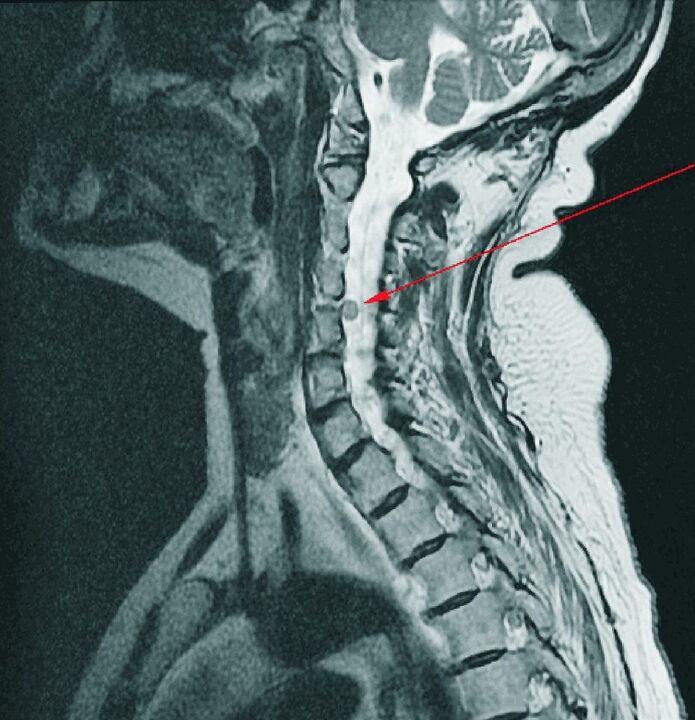
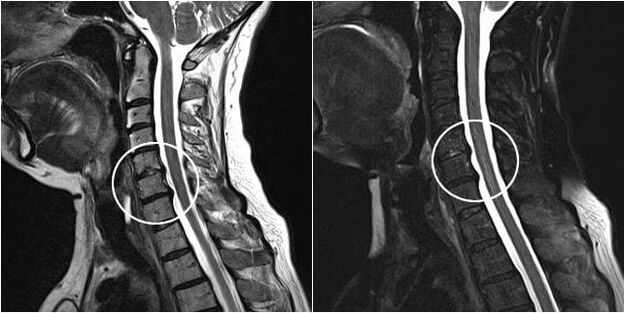
CT and MRI serve as additional diagnostic methods and are often used to assess the condition of the spinal cord and detect complications - bulges or intervertebral hernias.These studies are carried out with the aim of distinguishing cervical osteochondrosis from tuberculous spondylitis, osteomyelitis, benign and malignant neoplasms, ankylosing spondylitis and rheumatism.
First aid for exacerbations
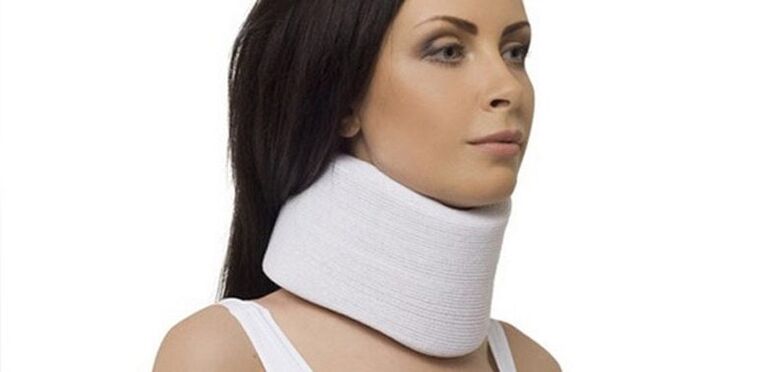
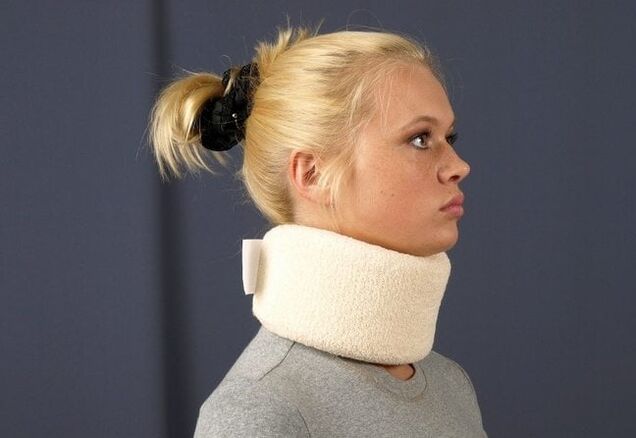
With a relapse of cervical osteochondrosis, pain in the neck appears so severe that the woman is afraid to turn or tilt her head.To reduce intensity, lie on a hard surface.It is necessary to adopt a posture in which the pain subsides.If a shants collar or semi-rigid bandage has already been purchased on the recommendation of a doctor, it must be worn when moving.
Taking a tablet of a nonsteroidal anti-inflammatory drug (NSAID) may help relieve a painful attack.Ointments and gels with NSAIDs have a pronounced analgesic effect.
The use of cold and heat is not recommended for initial care.Often relapse occurs due to muscle spasms, and cold compresses only increase the tension in the skeletal muscles.Dry heating is an effective means of eliminating symptoms, but only if there is no inflammatory process in the soft tissues of the neck.
How to treat cervical osteochondrosis in women?
Osteochondrosis of any localization cannot yet be completely cured.A neurologist or vertebrologist will definitely explain to the woman the meaning and principles of the upcoming therapy.Treatment is aimed at achieving a stage of stable remission.At this stage, pain sensations occur extremely rarely and the range of motion is completely preserved.

You cannot limit yourself only to taking medications, since drugs for the restoration of intervertebral discs and vertebrae have not yet been synthesized.It is necessary to follow all the doctor's instructions - attend physiotherapy, massage events, participate in physiotherapy and gymnastics.
From the first days of treatment, patients are recommended to wear Shants collars - orthopedic devices that stabilize intervertebral discs and vertebrae.They prevent the vertebral structures from shifting, thereby reducing the likelihood of relapses.
Review of medications for treatment
Sometimes, during exacerbations of cervical osteochondrosis, burning, stabbing pain occurs due to pinching of the spinal roots.They can only be eliminated by intramuscular injection of NSAID solutions.And if they are ineffective, medical blockades with anesthetics and hormonal agents are used.Glucocorticosteroids are not often used due to their negative effects on internal organs, cartilage and bone tissue.
A woman can relieve mild pain by taking NSAIDs in the form of tablets or capsules.For mild pain, as well as to reduce the dose of systemic drugs, non-steroidal drugs are prescribed in the form of gels and ointments.
| A group of drugs used to treat cervical osteochondrosis | Therapeutic effect |
|---|---|
| Chondroprotectors | Partially restores the cartilage tissue of the intervertebral discs |
| Medicines that improve blood circulation | Eliminate oxygen and nutrient deficiency and stimulate regeneration |
| B vitamins | Normalize the transmission of impulses to the central and peripheral nervous system |
| Muscle relaxants | Relaxes skeletal muscles and eliminates muscle spasms |
| Warming ointments | Accelerate blood circulation, have a pain-relieving and anti-exudative effect |
| Antidepressants, sedatives, sedatives | Relieves increased anxiety, restlessness and sleep disorders |
Physiotherapy, gymnastics, exercises
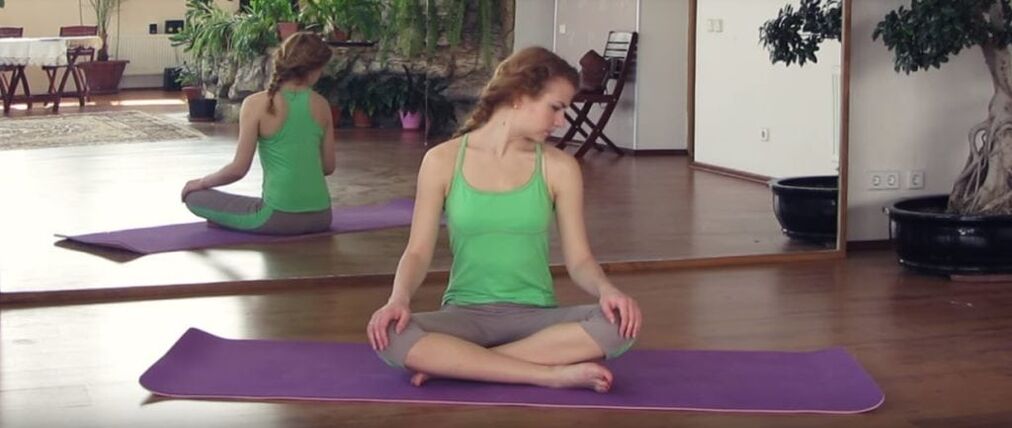
The most effective method of treating osteochondrosis is daily physiotherapy exercises.Dosed loads on the cervical spine strengthen the muscle corset, improve the blood supply to the tissue with nutrients and reduce the risk of exacerbations.It is necessary to start gymnastics immediately after acute pain is relieved.A physiotherapist creates a set of exercises individually for a woman, taking into account her physical fitness and the severity of the pathology.All movements are performed gently and with small amplitude.This strengthens the muscles without damaging the cartilage tissue.What exercises do physiotherapists recommend:
- Sit upright and place your palm under your chin.Try tilting your head while providing resistance with your hand.
- While sitting, place your palm on your cheek.Tilt your head to the side and provide resistance with your hand.
- Stand up, put your hands on your belt.Turn your head first one way and then the other without throwing it back too far.
With osteochondrosis, patients are recommended swimming, yoga, Pilates, water aerobics and Nordic walking.Cycling, running and lifting heavy objects are prohibited.
Nutrition and diet
With cervical osteochondrosis, nutritionists recommend limiting the consumption of alcohol, coffee and strong tea.These drinks interfere with the absorption of calcium and quickly flush it out of the body.Lightly salted mineral waters, fruit compotes and jellies, vegetable juices and berry fruit drinks are preferred.The optimal amount to drink is 2-2.5 liters per day.
You need to avoid fast food, processed foods, smoked meats and fatty meats.The daily menu should consist of fresh fruits and vegetables, cereal porridge, dried white or rye bread and dairy products.Turkey, chicken breast, rabbit and lamb are healthy.Two to three times a week you need to eat fatty fish, for example salmon or Norwegian herring.
It is better to avoid fried foods completely.The most useful products are baked in foil, boiled in water or stewed.
Physiotherapy
During the rehabilitation period, patients are prescribed 5-10 physiotherapy sessions.Electrophoresis or ultraphonophoresis with chondroprotectors, solutions of calcium salts and B vitamins is carried out to restore cartilage tissue, improve innervation and increase the strength of the ligament-tendon apparatus.The same procedures, but only with glucocorticosteroids, analgesics and anesthetics in the subacute phase, are intended to relieve pain and inflammation.

The following physical procedures can also improve a woman's well-being:
- UHF therapy;
- magnetic field therapy;
- galvanic currents;
- laser therapy;
- Shock wave therapy.
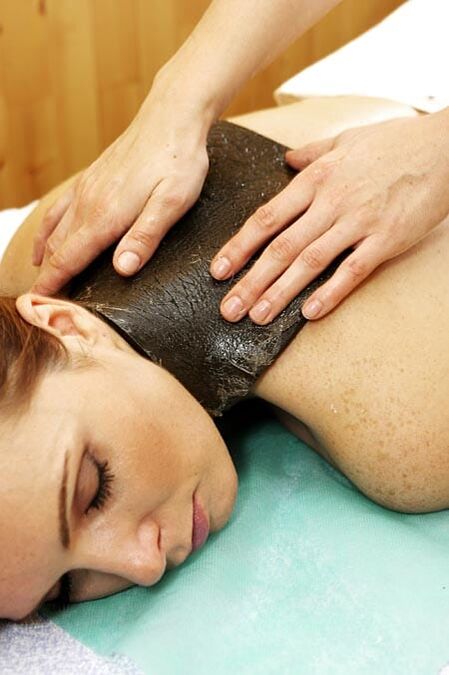
Applications with ozokerite, bischofite and paraffin are used.In the treatment of cervical osteochondrosis, the use of medicinal mud and mineral water as well as the placement of medicinal leeches have proven to be effective.
Massages
During massage, a mechanical effect is exerted on the muscles of the entire back and not just the cervical spine.However, the specialist pays special attention to them.Through kneading, smoothing, pressing and chopping movements, the spastic skeletal muscles relax, the ligaments are strengthened and blood circulation improves.In the treatment of osteochondrosis, the following types of manual and hardware massage are used:
- classic;
- Point;
- Vacuum;
- Swedish;
- segmental.

Pharmacies and medical equipment stores sell handheld electric massagers.They are equipped with special attachments and speed controls.And the device's comfortable long handle allows you to massage your neck on your own.
Folk remedies
In folk medicine, homemade ointments, alcohol and oil rubs, compresses, decoctions and tinctures are used to treat osteochondrosis.Representatives of official medicine are skeptical about such methods of treating degenerative pathologies due to their low clinical effectiveness.Exceptions are herbal teas made from chamomile, St. John's wort and rosehip infusion.

Features of the treatment of elderly women
The therapy of older patients is carried out using the same techniques as the treatment of young women.However, when determining the dosage regimen, the neurologist takes into account the presence of chronic pathologies in the elderly, as well as a decrease in the functional activity of the liver, kidneys and gastrointestinal tract.The doctor selects drugs whose use has a mild effect on the internal organs and reduces the risk of side effects.
Why is cervical osteochondrosis dangerous?
The leading signs of cervical osteochondrosis are similar in representatives of both sexes.However, neurological symptoms are more pronounced in women.They are more often diagnosed with an injury to the spinal roots and the vertebral artery that supplies nutrients to the brain.
In cervical osteochondrosis of the 2nd and 3rd degrees of severity, pinching of the spinal roots often occurs, which leads to acute pain, loss of reflexes and reduced sensitivity.Serious complications of pathology include intervertebral hernia, radicular syndrome and discogenic myelopathy.
Preventive measures
Cervical osteochondrosis is often detected in women who prefer narrow shoes with high heels.When worn, the load on the spine is distributed unevenly, which leads to microtrauma of the cartilage tissue.Women also often suffer from hypothermia and are acutely affected by everyday conflicts.And these factors are prerequisites for the development of pathology.Therefore, their exclusion from the usual lifestyle is an excellent prevention of osteochondrosis of any localization and its consequences.